
When math feels hard, our instinct is often to step in and help right away. In my math sessions, I often do the opposite. I pause. That pause is intentional. Children need time to think, try, make mistakes, and adjust their ideas. This is where real learning happens. Pausing gives them the space to explore and grow, rather than simply waiting for an answer to be given. One simple idea guides much of my teaching:
MATH = Mistakes Allow Thinking to Happen.
When we truly believe this, struggle is no longer something to avoid. It becomes something to value.
Mistakes and Challenges as Opportunities
How children view mistakes and struggle makes a huge difference in their learning. As Jo Boaler emphasizes in Mathematical Mindsets, errors are not setbacks. They are opportunities for growth. When children understand this, they begin to approach math with curiosity rather than fear. Teaching math as an open, creative subject focused on connections, exploration, and growth encourages children to take risks and think deeply. These ideas have shaped the way I design my sessions, making them spaces where challenge leads to discovery, not frustration.
What Productive Struggle Looks Like
When children see mistakes as part of learning, they are ready to engage in what we call productive struggle.
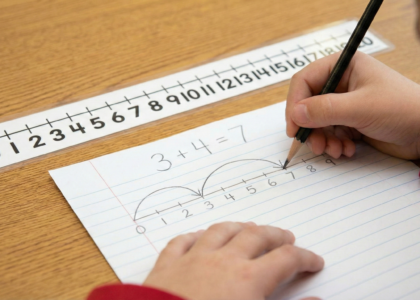
Productive struggle happens when children are encouraged to think, explore, and problem solve with support. The task may feel challenging, but it is within reach. Children are guided to try different strategies, use models and visual tools, and talk through their thinking as they work towards understanding. They are not left to feel overwhelmed or stuck. Instead, they learn to approach challenges with curiosity and confidence.
I do not rush to give answers, because doing so can take away valuable thinking opportunities. When children are allowed to work through challenges, they develop a deeper understanding of mathematical ideas. More importantly, they begin to trust their own reasoning instead of relying on someone else to provide solutions. During sessions, I carefully support their thinking by asking thoughtful questions, offering tools when needed, and stepping in at the right moment. The focus is always on understanding, not speed.
When children experience supported struggle, they learn something powerful. They realize they can think their way through something hard. That confidence does not stay in the classroom. It carries into future learning and everyday problem solving, helping children approach challenges in all areas of life with resilience and belief in themselves.
Supporting Productive Struggle at Home
Parents can play a vital role in helping children embrace productive struggle. One of the simplest ways is to give children time and space to think before stepping in with answers. Encourage them to explain their thinking and ask questions such as, “How did you start?” or “What are you noticing?” Praise their effort, strategies, and persistence rather than speed or correctness. Remind children that mistakes are part of learning and celebrate the process of figuring things out. Small changes in the messages children hear at home can make a big difference in how they approach challenges and build confidence in their abilities.