Task selection and creation sit at the heart of effective mathematics teaching. Well-chosen tasks are not used to fill time; they are carefully designed to reveal student thinking and deepen understanding. Everything begins with a clear learning intention. Before choosing a task, I ask myself what I want students to learn, understand, or reason about. Tasks may align with current curriculum goals, prepare students for future learning, or intentionally extend thinking beyond core content. Just as importantly, I consider what the task will help me assess.
Thoughtfully designed tasks make thinking visible. They show how students approach a problem, the strategies they choose, and the misconceptions that may surface along the way. Rather than focusing solely on answers, these tasks invite explanation, discussion, and justification.
An Example: Designing for Meaningful Thinking
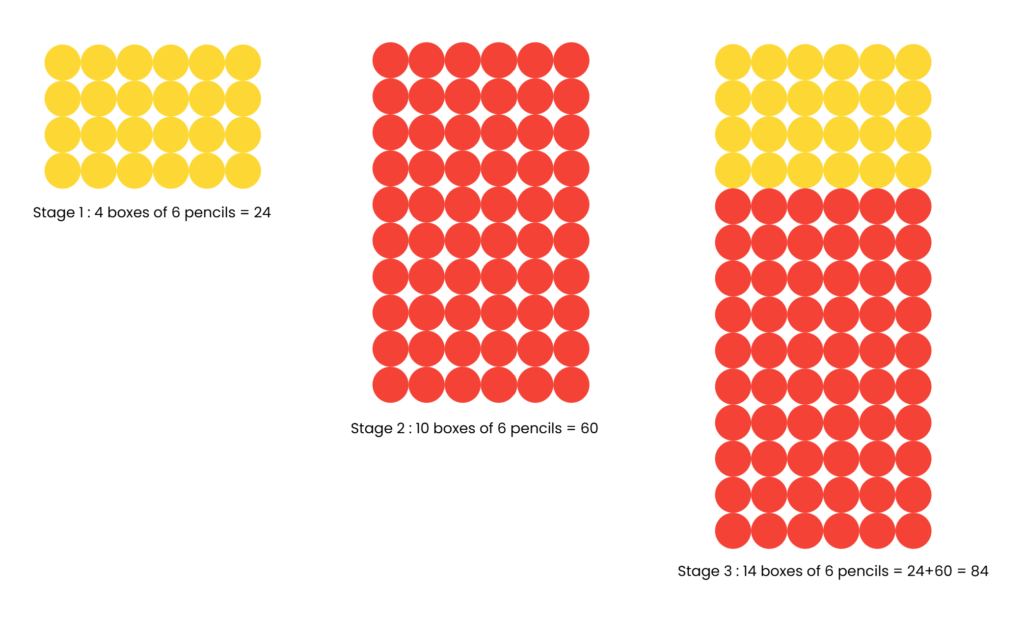
Consider a multiplication task. When designing activities, my goal is to develop strategic thinking and flexible number sense, not just correct computation. I might begin with 4 boxes of 6 pencils, encouraging students to use manipulatives or drawings to figure out and explain their thinking. We discuss different strategies and models, making reasoning visible.
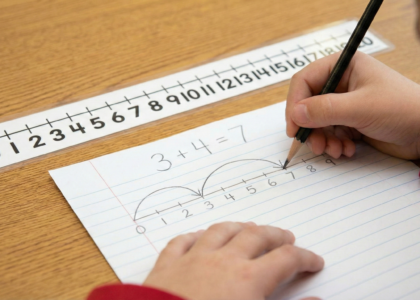
Next, we explore 10 boxes of 6 pencils, again using manipulatives or pictures to reason and demonstrate thinking. This allows students to refine their approaches, compare strategies and begin noticing patterns. Finally, I pose a larger challenge, 14 boxes of 6 pencils. Students grapple with the problem, discuss strategies, and slowly discover that breaking 14 into 10 and 4 makes the calculation more manageable. They calculate 10 × 6 and 4 × 6 separately and then combine the results. Using manipulatives, drawings, pictures, etc. makes the numbers tangible and supports students in actively constructing understanding rather than memorising facts.
What Makes This Task Intentional
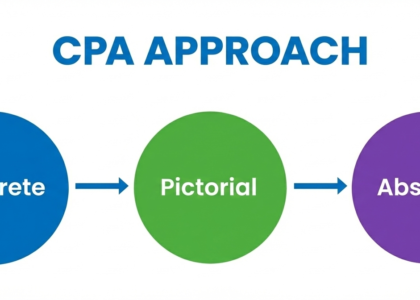
This task is intentional because every element is deliberately designed to support deep learning. The progression from 4 × 6 to 10 × 6 and finally 14 × 6 is purposeful. It builds confidence, highlights structure and encourages flexible strategies. Manipulatives are used meaningfully to bridge concrete and abstract thinking, while discussion is structured to surface reasoning, compare approaches, and encourage justification. The task is not about arriving at an answer; it is about sense making and understanding the structure of multiplication in a way that prepares students for future learning.
Accessibility, Depth, and Productive Struggle
Effective tasks are chosen with both accessibility and depth in mind. Low entry points ensure all students can begin and experience success, while multiple pathways provide challenge and extension. In my sessions, success is not measured by speed or by using one correct method. It is measured by reasoning, sense making, and the ability to explain one’s thinking.
Intentional tasks promote productive struggle, giving students the time and space to think, try, revise, and persevere. They require reasoning rather than the following of procedures and support deeper understanding by helping students connect ideas across topics and to prior learning. They allow students to approach the same problem in multiple ways, using a range of strategies, representations and mental methods. These experiences strengthen mental maths and problem-solving skills while encouraging flexibility in thinking, leading students to notice patterns and generalise mathematical ideas.
Connecting Beliefs to Practice.
My teaching approach strongly influences the tasks I choose. When conceptual understanding is prioritised over speed or rote procedures, tasks naturally invite thinking, discussion, and sense making. Time, context, and the needs of learners also shape task selection, ensuring each activity fits the structure and purpose of the session. Technology is used thoughtfully, only when it enhances visualisation, exploration, or representation rather than replacing mathematical thinking.
Tasks are not worksheets to complete; they are invitations to think. Each one is chosen with intention, giving students space to explore ideas, test strategies, make mistakes, and refine their thinking. These moments of struggle and discovery are where meaningful learning happens. When tasks are thoughtfully selected, students do not just do mathematics. They make sense of it, talk about it, and build understanding they can carry forward with confidence.